Search This Blog

Thursday, May 5, 2011

FEED – M.T. Anderson

On 10/15/10 ACHS Literati met to discuss their choice of three titles and I hosted Feed by Anderson. Several students had expressed an interest in resurrecting this class set but when it came down to getting it read I ended up with two kids and only one had completely finished it. Oh well… I had used this title with success several years ago but his group seemed to think it was too harsh, the language was too bad, or they just couldn’t get into the somewhat convoluted plot.

I liked it, even though the language is very low-class. We talked about why we thought that is and I am proud to say that both my group from the past and these students realized that the author was making a point about evolving language and cultural mores. In this book many things that are taboo today are the norm in a future world where people live in stratas, mobility is accomplished easily vertically as well and horizontally, and people party on the moon.

Children in this future world download their lessons at their appropriate maturity level through a feed into their brains. The feed also delivers ads and collects marketing information from the kids. At a party a virus is introduced to some feeds which results in brain illness making the kids very ill and one begins to die. We discussed the love story, family issues, and cultural issues also included in the plot lines. The environmental issues seemed to be what interested my students particularly. They seemed not at all to think that the world in this book is unlikely and they wondered what it would be like to have no easy access to plants, trees, and animals. We did discuss whether it would be really “cool” to have no school, just a feed that along with your lessons you get adds directly into your thoughts… continually... similar to pop-ups adds on the Internet now.

Wednesday, May 4, 2011

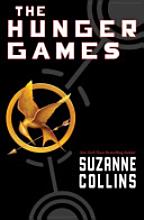
THE HUNGER GAMES – Susanne Collins

On 12/10/10 our middle school had a “Hunger Games Book Party.” Our school purchased multiple copies of this dystopian YA novel and for a long period of time last year they were all checked out with reserves pending. The high school Literati group read it liked it so much that this school year we decided to open it up to the middle school and plan a “Hunger Games Party” to follow up. Any student in grades 6-8, who wanted to, could sign up to take part. They were given a period of several weeks which was over Thanksgiving break and through the first two weeks of December. 45 students completed the book, passed a quiz, and were sent invitations to attend a “Reaping in Area 12.”

The library was set up segmented by numbered “Districts” using large paper circles on the tables. A cornucopia was at the entrance containing folded papers with items printed on each one to signify what might have been available to the tributes. On a table, were decorations to set the scene such as bows and arrows, loaves of bread, herbs and bandages, and a large North American map with transparencies representing districts so we could discuss where they might have been and move them around on the map. In preparation for our own “Hunger Game” we made up brown paper bags with treats and prizes to be awarded during the game.

The students got invested in this post-apocalyptic world where Panem is a loosely disguised North America. Most knew that Katniss was from somewhere in what is now Appalachia but placing the other districts around the continent took a lot of clue searching and speculation. It is amazing what the readers remembered about the differing districts. Some high school students had been able to relate this book to Brave New World by Aldous Huxley and Orwell’s 1984, but middle schoolers are not so savvy so I was very please that some knew to connect it to The Giver by Lowry, and The Last Book in the Universe by Philbrick. They of course were intrigued by the concept of the hunger games, the sponsors sending things to the tributes as they fought for survival, and the idea of the rest of the nation watching the games live on TV. The students were very vocal about the character development and of course they liked the love story unfolding. I retrieved some discussion questions from the author’s web site but we didn’t need them. These readers were so into this book that they freely discussed how they felt about the plot and what they thought would happen, their feelings about the deaths, and even the psychology of the effects on the tributes who survive. By the end of discussion I was sure most of these students would go on to finish the series.

Students sat by “district” as each got a corresponding number and also one item from the cornucopia. A “parachute” (umbrella) hung from the ceiling with a basket of snack food attached which was the final prize for the winning team of our game. At each place was a treat, relevant to the book, of bottled water, bread & jam, and cookies (from Peeta’s dad), and score sheets.

We played a simple but animated game which I would like to say I made up but I am pretty sure I simply adapted one I heard or read about. I read short pretend game scenarios which included points for having cornucopia items which each team tallied. As I was reading I would stop occasionally and shout out an announcement and give out “sponsor packages” such as a bag of beef jerky to the team with the least amount of points, candy coal to those who were resourceful and took shoes from the cornucopia, or candy corn to the team with a shovel. At the end of the game the team with the most points got the parachute prize.

It is rare to get so many kids this excited about one book. Discussion was animated and there was much speculation about what actors would be good to play the lead parts.

Tuesday, May 3, 2011

NOTES FROM THE MIDNIGHT DRIVER – Jordan Sonnenblick

On 9/17/10 Five students met to discuss this contemporary teen problem/comedy book. I was really pleased to hear what they had to share. The first item up for discussion was the cover. Several students said that until I pressured them to they didn’t want to choose this title because they viewed the cover as elementary and too silly. I believe they had a point. The garden gnome behind the wheel of a car did seem a little funny, especially since in the story he is decapitated and under it. However, we all really liked the book.

A worry had been at the beginning when Alex, who is portrayed as a good kid and a good student, rebels against his parents who are separating that this would be just another problem teen book. So it was interesting to the students when Alex evolved into a caring, intelligent, insightful young man. After he gets drunk, steals his mom’s car, and vandalizes the neighbor’s lawn that is. The students found it refreshing that the growth occurred because of new relationships, sharing music, and a developing sense of responsibility and not through harsh judgment as is usual in many teen novels.

They found Alex frustrating but quite believable and likable. The introduction of a tad bit of romance didn’t hurt the story either as cute pixie-like Laurie added some dimension. They liked her character and knew she was Alex’s girlfriend before he figured it out. Also, they liked the humor and cantankerous Sol Lewis the aging ex-jazz guitarist to whom Alex is assigned for community service.

I knew the vocabulary and plot was a bit simple for high school sophisticated readers but for the beginning of the year and especially for the freshmen it was still a good choice.

Sunday, October 24, 2010

MONSTER OF FLORENCE – Douglas Preston & Mario Spezi


The Jay County Public Library book group met to discuss this book last Monday. (Sigh) I took so long to stew about the meeting that now I'm not sure what I want to say.

This piece of nonfiction is a fascinating narrative of two men, an America author newly living in Florence and a noted and respected Italian journalist, who investigated a series of cold-blooded murders in the hills around Florence, Italy. In the process of their investigations the Italian was arrested for the crimes and the journalist had to flee back to America to avoid the same fate.

But that didn't end the friends' investigations and this book is the product. Preston and Spezi had been on TV in a special by Stone Phillips and that is what prodded me into reading their book. The story of their trials and difficulties with Italian authorities and the strange justice system is as engrossing as the stories of the murders. I couldn't wait to finish it to see how the book got completed and if they ever found out who the killer was.

The murders had begun in 1968 and continued well into the 1980s with many people being investigated but no hope of any real closure. The crimes were perpetrated always against young lovers and the bodies were terribly mutilated.

As the reader you delve into more than just the murder investigation. Generations of secrecy and taking care of ones own, misuse of the justice system, incompetent authorities, sub-cultural mores, and ideas about social strata are all examined. I was shocked to find out how different the laws are in Italy and on what little evidence one can be arrested and even convicted. Several people were in fact convicted only later to be found innocent!

I read this a few years ago with my Monroe adult group and that discussion was animated, lively, and so much fun. The hosts of the discussion had brought maps, copies of news articles and transcripts from the Stone Phillips interviews. Most of us if not all were equally entranced with this book.

Alas, The JCPL group did not feel the same. Maybe two or three of us were glad we read it. The rest either didn't like it at all or didn't even read it. Anyway, that so disappointed me. I am thinking that the JCPL group likes to read “shallow” or in other words they don't want to read anything that is disturbing, that they have to really dissect or think deeply about, or anything that questions their values or ideals. Also, many of them won't read anything that has “ugliness” like death, or persecution which leaves out holocaust material, books where the people struggle with abuse, poverty, etc, and any book about current war issues. They love to read what they refer to as “sweet,” “beautiful,” or “warm.” Now, that is not a bad thing. There are a lot of people like that and they read what makes them happy, and once in a while I like that too. However, that is not what I want to do steadily. I want to feel, really feel, and think, wonder, predict, be shocked, surprised, etc. especially when reading a book that will have a discussion. I don't always have to like a book to finish it, or see value in the discussion. I must the oddest of oddball readers?

Tuesday, September 28, 2010

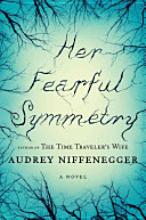
HER FEARFUL SYMMETRY - Audrey Niffenegger

I was entranced with this book from the moment I picked it up: the intriguing cover; the dark and brooding cemetery pictures; even the spooky font of the chapter titles served to fuel my anticipation. Hooked from the first line, “Elspeth died while Robert was standing in front of a vending machine watching tea shoot into a small plastic cup,” and the rest of that first page which contained memories of smells and conversation, and the dying woman calling to her much younger and doting lover who doesn't get there in time to hear her. (sigh)

If you are in the mood for a bit of noir with mystery and romance revolving around a cemetery in London this book is for you. Elspeth, the dying woman bequeaths her flat and most of her possessions to the 21-year-old American twin daughters of her own estranged twin sister. Julia and Valentina must live in the flat for one year before they are allowed to sell it and their parents are not allowed to enter it at any time. Elspeth willed Robert her diaries so the secret as to why she and her sister were estranged resides in his flat, in boxes, unread.

The tiny elfish and pale girls arrive and take up with Elspeth's neighbors, friends and her lover, Robert. Robert is a fascinating character. He is lost without Elspeth and can't seem to get focused. He is working on his master's thesis while serving as an historic guide for Highgate Cemetery. I must confess I see him as Johnny Depp-ish as he works through his grief, tries to keep poor Martin the reclusive OCD victim upstairs in one piece, and help the twins navigate London.

Let us not forget that this is a ghost story. She is residing in the flat with the twins practicing her haunting and getting stronger each day, along with the stray kitten the girls lure into their home. There are many subplots and twisting turns to this book and I loved them all. The reviews weren't all kind when this book hit the stands, but I tend to like what other (and often more educated people) do not. I liked the characters, the complicated plots, the engaging language and even the creepiness.

The adult Literati group at Adams Central has picked this title for our October read and since my friend Al and I are the hosts I wanted to read it in enough time to plan my props and refreshments for the meeting. Absolutely made me half-angry to put it down every day to go to work! I think I am going to serve tea, digestives, and sandwiches but may be not prawn-mayonnaise.

Wednesday, September 22, 2010

SOUTH OF BROAD - Pat Conroy

Last evening for Adams Central Adult Literati we discussed this title. I must say it went very well. My only regret is that we had new members and they were not prepared for the content. When we met in the summer to choose our titles we probably didn't make it clear that sometimes in our literati world we do have salty language and mature content as well. Their problem was mostly with the flying "f" word and violence. 

Getting past that, we had a very involved and positive discussion for which 15 of our 23 members attended. For group a few years ago we read Conroy's autobiographical book, The Water is Wide. Many others of us had read Prince of Tides and Beach Music also.  Therefore we were prepared for lyric text, complicated characterization, and lively intricate plot. We were not disappointed. I have to say it is a really great read. 

Newspaper columnist Leopold Bloom King narrates this saga of Charleston, South Carolina. As the reader you follow Leo from the late '60s after his brother (the family golden child) commits suicide through 1989 right after Hurricane Hugo. During his senior year in high school Leo’s circle of friends become a strange conglomerate of Charleston aristocracy; Appalachian orphans; a black football coach's son; and an astonishingly beautiful pair of twins.  Early on it is made known that the twins, Sheba and Trevor Poe and their alcoholic mother are evading their psychotic father. 

The book then alternates between 1969-1970 high school stories and 1989 when the friends are once again banded together to find Trevor who is purported to be dying of aids somewhere in San Francisco.   The high school chapters are full of social, sexual, and racial escapades including the romances and struggles of all the friends, (who incidentally end up with each other which may or may not stretch your believability) along with the major development of Leo’s character. The 1989 chapters are full of intense scenes of adults re-bonding, inspecting where their life has taken them, and dealing with scary violent situations foisted upon them when the twin’s psychotic father reappears.  

In my humble opinion the character development is phenomenal. Some of the high school chapters come together a little too easily or pat to suit my taste but never-the-less they served to move the plot along. One reviewer I read said, “Fans of Conroy's florid prose and earnest melodramas are in for a treat.” A real treat it is. One of our members said, “Usually I don’t like stories that have so many wordy words, but I really liked this one.” By “wordy words” I think he is referring to the reviewers “florid prose” as mentioned above. I know that can be annoying sometimes.

Once I picked it up I didn’t want to put it down.  Romance, rivalry, murder, danger, warmth, religious issues, it has it all, and “wordy words” too for language lovers everywhere. 

Friday, August 20, 2010

ANIMAL, VEGETABLE, MIRACLE – Barbara Kingsolver

Monday was Jay County Public Library book group and this was our chosen title. Pretty good show this time! There were nine of us and discussion went pretty well. Most of us had read Kingsolver's novels and they are delightful. Many of us agreed that our favorite of her novels was The Poisonwood Bible. Animal, Vegetable however, is a work of nonfiction. It chronicles one complete year for the Kingsolver family after they move from Arizona to Virginia to live upon only locally grown food. It is a book to make you think about your food and what the complete cost of every morsel is.

I don't think there is an issue that isn't examined when it comes to food production. She tackles corporate farming, CAFOs, processed foods, pesticides and hormones in farming, transportation of foodstuffs, exotic imports, farm subsidies, taxes to support the food industry, vegetarianism and much more.

This is truly a thought-provoking work. I spent many hours in hmmmm mode thinking about chapters and ideas. She definitely made me think about how much meat we eat. By the time I finished the chapter on carnivory I felt better though. She had many statistics on the price of eating only vegetables when you add up the cost of fossil fuels used to get it to you, the resources depleted growing it in hostile environs, the packaging etc. While it is a known fact that Americans need to eat less meat, it isn't actually helping the unprivileged in any way to do so like so many try to tell us. According to Kingsolver anyway.

Her style is as usual engaging with delightful storytelling and a rich vocabulary. Her family is intelligent, dedicated to each other and to their experiment. I believe the author's aim is to make us more aware of our food and our impact on our world by what we choose to consume. Also she would like us all to get better in touch with our environment including our neighbors in order to be productive and helpful. Their year was filled with a lot of joy, much learning, and some travail. Overall, it was a very good read for nonfiction which isn't my usual fare.