Search This Blog

Monday, May 20, 2013

THE ROAD – Cormac McCarthy


This 2007 winner of the Pulitzer prize is dark and murky, hard, and yet tender. Apparently I simply cannot stop reading post-apocalyptic fiction and I continue to marvel at a good story presented to me by great authors. We will discuss this work on May 20 at the Jay County Public Library and I am almost certain that the very proper good ladies of group will mostly not like it, and perhaps there will be only a few of us who finished it. Update to follow this post after group. That being noted, I loved it and read it twice.

It is disconcerting always to begin a book by an author who uses no quotation marks and haphazardly interjects apostrophes, but one soon gets used to it and it doesn't keep the reader from knowing what is being said or who is speaking. However, I would like to know the reasoning for this style of writing.

I was hooked on page one with the line, “Like Pilgrims in a fable swallowed up and lost among the inward parts of a granitic beast.” For pilgrims they are and the “granitic beast” is actually the post apocalyptic world they are stuck in. My first sticky note was on page 5, “They set out along the blacktop in the gun-metal light, shuffling through the ash, each the other's world entire,” and already I knew that the-end-of-the-world-as-we-know-it has happened, years have gone by in a type of nuclear winter, and the boy and his father are seeking people and refuge. Reading a book with sparse wording so full of emotion and clear imagery is fun. I admire a writer that can do that so well. It is clear to me why so many say The Road is too dark, too depressing, and yes even boring. Those readers are looking for escape, or plot driven intrigue, or intricate characters. But it is also good to read for the nugget of wisdom hidden in a good story, and a book to make you wonder about what it would be like if the end did come, without codling the reader and making things come out too easily or unbelievably. That is what usually happens in YA lit and we should be beyond that.

McCarthy makes the reader afraid, and makes one able to anticipate what is going to be down the road when the boy and his father trek on. There are cannibals, marauders, dead carcasses aplenty, much dirty rain, and many cold nights. The father teaches the boy lessons as they travel and also tries sometimes to shelter him from the most ugly or evil for as he says more than once in this book, “...the things you put in our head are there forever.” One can see and feel the textures and colors, and even feel the cold through McCarthy's creative use of language like, “cauterized terrain,” “vestibular calculations,” and “cold autistic dark.”

There are warm scenes also showing the total love and devotion of a parent for a child and a belief that goodness is there but you may have to search for it. Honestly, I don't know why so many people shy away from the tale noir. I find a great dark tale fascinating.

Friday, April 19, 2013

A VERY LONG ENGAGEMENT – Sebastien Japrisot


Haunting, magical, scary, heart-wrenching, difficult at times... What else should I say in preface to telling you I loved this book? A nice hard copy for my personal library would be in order. That being said I am not sure I have a friend to recommend it to because it starts so difficultly. I myself may not have stuck with it if it had not been a book club choice - and I am very much against being in a club if you aren't prepared to make yourself read all of the selections. However, after re-starting at least twice, it was very much worth it.

How could you not fall in love with a book that begins thus:
“Once upon a time, there were five French soldiers who had gone off to war, because that's the way of the world.
The first soldier, who in his youth had been a cheerful, adventurous lad, wore around his neck an identification tag marked 2124, the number assigned to him at a recruiting office in the department of Seine. On his feet were boots taken from a dead German, boots that sank into the mud of trench after trench as he plodded through the godforsaken maze leading to the front lines.”
The engagement was long indeed. Ten years (1917-1927) spans the time wheel-chair bound beautiful Mathilde searches for her lost fiance, Manech. The book begins with five French soldiers of WW I being sent to the front in lieu of execution for shooting themselves in attempts to get out of the fighting. They are put out into the space between the French and German lines knowing it is unlikely that they will survive. Before they are sent out they are each allowed to dictate a letter home. The next day when the French advance they do indeed find five bodies. From there the reader is spun into multiple webs of stories surrounding the five men and their respective wives and lovers. The women receiving the letters were told by the military that their husbands and lovers were killed in the line of duty. Some of the letters contained coded messages. Some of the women try to find out exactly what happened, how their men died, and Mathilde is one of these. Over the ten years she investigates and puts many pieces together to try to find out what really happened.

The characters who cross Mathilde's path and those who's lives intertwine the other women are so colorful it was a joy to travel a bit with each of them. I think I love Mathilde because she is dedicated to truth, always, no matter what (as I tend to be) and it helps that she has many cats whom she loves. She also is an artist and dotes on her parents and care givers as they do her. Her quest begins in earnest when she reconnoiters with a dying Sergeant Esperanza who tells her what he knows and gives her copies of all the mens letters and a picture of the five men. It is after reading all the letters and making notes of what Esperanza told her that she begins to believe in earnest that Manech is not dead.

The quest with Mathilde is what keeps you reading, there is sadness and disappointment but there is beauty and fun also. There is an avenging prostitute, a colorful detective, and a supposedly dead motorcycle riding soldier who cannot stop riding for long, a grieving godmother, to name only a few of the great characters. I need to read this book again.

THE DRY GRASS OF AUGUST – by Anna Jean Mayhew


The Dry Grass of August is a very good book and I would read it again. It takes place in 1954 when Jubie's family leaves Charlotte, North Carolina to go on a vacation to see her uncle in Florida taking along the black maid, Mary. It is beautifully written with many dimensions. While it is a coming-of-age story for Jubie, it is also a commentary of the upper middle classes in conflict, and the dawning age of civil rights. Jubie's father fights alcoholism, her mother suffers under his oppression and her own unrest.

At some time in everyone's life there comes an awareness of wrinkles in the fabric of social life. It was 1957 for me. The second grade was exciting, fun, interesting, and kids were inviting each other to parties where we were beginning to learn that all families were a little different. At dinner one evening I announced to my family that I had a boyfriend, Curtis. He was so funny, and kind. He spoke softly and always picked up my pencil or book if I dropped it. He had a wonderful smile and all the other kids appeared to like him. Silence filled our warm kitchen. Finally my oldest brother said, “Curtis cannot be your boyfriend, he's a negro and you are not.” My family went on chatting and eating while I considered that a bit but not for too long. I do remember thinking, “Oh, ok, well then I guess I will like Mark.” Today I ponder why children accept those things so easily. That memory surfaced while reading The Dray Grass because I could relate to thirteen year old Jubie's innocence about matters of race and violence in the 50s, and her infatuation with the black boy, Leesum whom she meets in Florida.

Jubie had Mary all her life, she loves her unconditionally and Mary loves her. Jubie never entertains ideas of other people's lives being any different or others seeing things other than the way she does. So as the family traverses south and she sees more and more signs of segregation and racism she is bothered by it but doesn't take it as seriously as she should. When real tragedy happens she is ill equipped to handle it. The adults in the book seem to me to be real and accurate portraits of the 1950s. Jubie's mother, Paula, while loving her family she is detached from their everyday lives, she is dissatisfied and suspects her husband of infidelity. The town they live in is also changing and Jubie herself is growing up.

Mary has always been more than a maid to the family, she has been cook, nurse, and mother stand-in. Some say that the author by portraying her so subservient, dismissive, and not able to make eye contact with white people, makes her not a believable character when reader knows Mary is intelligent, loving, and principled. History tells us that is the way black maids operated at that time during the Jim Crow laws. To make her other than that, for us who remember would be the untruth.

When the family finally does fall apart, Jubie must face the flaws in her parents, the limitations of what she can and cannot do, and the injustice of her world, as we all do. She is a great protagonist to live with for a whole novel and she is full of love and courage. While you know that there may be hope for her flawed parents to learn and rebuild, you want to go with Jubie into her uncertain future so I am hoping for another novel from Mayhew taking Jubie into adulthood.

Tuesday, March 26, 2013

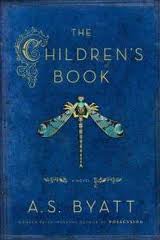
THE CHILDREN'S BOOK – A. S. Byatt

This 675 page (with small print) multi-generational saga of a bohemian style family in Kent, England took several days to read over Christmas. I was so looking forward to this book since it had been well promoted and seemed to be just my style. I did like it but not as much as I thought I would. So much food for thought, historical insight, art appreciation, intrigue, social engagement, and storytelling all wrapped up in a beautiful cover (including a beautiful broach which is part of the story) and promising many hours of being enthralled by unusual people and a different lifestyle.
The characterization is phenomenal and the intersecting plot lines are interesting. Period family stories have always been a draw for me and this one took not just the family but a whole community from the end of the Victorian era into the Edwardian period so I was happy about that. The overall story revolves around Olive, the matriarch of a wealthy family. Olive was raised in poverty but married well and worked her way into a world of privilege becoming a popular and respected writer of enchanting children's stories. Her books are fantasies containing not only fairy creatures but also darkness and foreboding plots. A very British look at the arts and crafts period and the free lifestyle of the art communities.


I really want to put this in a nutshell but there is so much! Olive is very preoccupied with her writing, her children very nearly raise themselves on their huge estate, and her husband is not faithful, but there is adventure, joy, and much love. The community is burgeoning with beautiful art and made up of writers, actors, and artists, including a depressive and perhaps crazed potter/sculptor, a museum curator, orphans taken in, and many children. There are midsummer parties, Shakespearean puppet plays, art exhibitions, women's movement meetings, and then to bring the novel to an end the Great War. It is both enthralling and exhausting.
One subplot that is particularly fun to follow is Olive's stories for her children. They each have their own personal story, unpublished and continually being written. How cool would that be?
My favorite character is Dorothy, who is Olive's “different” daughter and unusually in tune to the world she lives in. She is bright, kind, and interested in the new politics of the age as well. Even though there are many characters, mostly children, they stay real and vibrant and one does not have time to forget who they are as the plot progresses. I would say that one of the themes Byatt explores is the free-love of the arts and crafts movement communities and the discontent and confusion it bred in the children of those families. While I did like The Children's Book very much I will once again state my premiss that some of the new books could take a bit more editing. Some of the meandering of the subplots become tedious and there is something to be said for the writer who can tell a better tale by making it shorter. However, that being said be assured that the writing of the British storyteller here is beautiful and interesting and if you tackle it you will be glad you did. I much regret being on a time crunch and reading it too fast, for you really should be able to put it down and digest it a bit. Or even better read it with someone else so you can discuss the history included, characters, and plot turns.

Saturday, March 23, 2013

THE FAULT IN OUR STARS – John Green


Sometimes, you read a book and it fills you with this weird evangelical zeal, and you become convinced that the shattered world will never be put back together until all living humans read the book. And then there are books… which you can’t tell people about, books so special and rare and yours that advertising your affection feels like a betrayal.”—Hazel, from The Fault in Our Stars

Is the above (from page 33) not the best book quote ever? My second favorite quote is used many time in TFIOS and is, “The world is not a wish-granting factory.”

I've meant for some time to read a John Green book because he gets such good reviews and he has several books on the New York Times best seller list. Also, he has great short instructive videos on Mental Floss a favorite web magazine to which I subscribe. Therefore, I purchased a copy of The Fault in Our Stars yesterday to read while waiting on a vehicle repair. After staying up until after 2 a.m. and then doing the “leave me alone I'm very busy” routine with my family this morning I, and my box of tissues, completed my quest. (deep sigh) Loved it.

You will need tissue. How Mr. Green has so successfully written about terminal illness is something I ponder but also fear I don't want to know the answer. Of course I myself have not ministered to a dying person who was not older, and have not lost any children, so I cannot say 100% that his portrayal of terminally ill people and their families is totally accurate. All I can say is that the reviews are positive and the story feels real. Even though you will need tissues don't fear the maudlin or over dramatic here. While there is sorrow there is happiness, wit, wisdom, creativity, sarcasm, and the joys to be had of following characters you care about and who are very much like people you know or are. This novel is so well crafted that the reader feels relief upon finding that dying people don't want you to be crying for them all the time, they just want to be happy and get the same things from life that everyone else gets.

Of course you know going in that both main characters are dying. They meet in a support group for terminally ill teens. It is also clear that this is not a fantasy and there will be no life-saving wonder drugs or superheros whisking off the dying. Hazel is 16 and has been fighting death since her terminal diagnosis of thyroid cancer when she was 13. She meets and falls in love with Augustus, 17 who has had one leg amputated because of cancer. They are both smart, good students, and well-read. Their repartee and loving banter while hysterical to them is sometimes annoying to others but is so fun for the reader. Hazel and Gus bond in several ways but one major interest for them is a book. A fiction book called An Imperial Affliction has meant so much to Hazel that the teens go on a quest to meet the author. The meeting goes not at all as the characters nor the reader expect and is quite shocking actually.

Many of my friends will not read this book and they will say they don't wish to read "sad." They want to escape and be entertained. Well you will be entertained, but you will also be educated, and perhaps you might exercise your ability to appreciate irony and sarcasm a little?

A VISIT FROM THE GOON SQUAD – Jennifer Egan


A novel in vignettes, and if you like a book that bings you around the lives of the characters like you are riding a pin ball then this is for you. A little unsettling sometimes maybe, but a really creative ride it is. Egan toggles the reader around between 1970 and sometime in the not too distant future after 2020, and through a myriad of protagonists. Their lives are all connected and do come together in the end so there is that to keep in mind. Perhaps we are doing one of those “six degrees of separation” things here? I am not familiar with Egan but I found whole chapters that were so intense and characterization so colorful that leaving them to romp off with another while many years passed left me somewhat irritated. It would be possible for me to go back and reread for instance all the “Sasha” chapters and be happy. All the characters come and go over the years and seem to bang around and into each other over and over.

Sasha begins the book. She is a kleptomaniac who is compelled to steal personal items and who is also working for Bennie, a record producer. They have their middle-aged dilemmas. Bennie is trying to keep his career together, have a normal relationship with his child, and fight impotence. Sasha tries to keep Bennie in tow, date, and fight her mental illness. When people from the past enter the scene like Scotty, a Flaming Dildo band member who has been living on the street, Sasha's college lover Drew, Jules a celebrity journalist, Lou an amoral entertainment mogul, and Stephanie, Bennie's ex-wife, then the book rockets into the 1970s. Sasha had been a runaway to Europe working as a prostitute and Bennie was the guitarist for the band Flaming Dildos. There is also a bloated has-been rocker trying to be resurrected, a genocidal dictator, and an aging starlet to contend with.

The rocketing around from character to character and back and forth between four or five decades takes 13 chapters but only 288 pages so you know it goes fast. At first I thought this piece could never hang together but it did and I liked it. Before I read it I saw a reference to A Visit From the Goon Squad as a “mash-up.” Possibly that is a good description but it is more than that too. If you are, as I am, in your “middle age” you may be called upon to remember the 70s and 80s and try not to judge the characters too harshly. There is sadness, irritation, but also humor, irony, and sarcasm written here with skill. 

Friday, March 15, 2013

THE PALE KING - David Foster Wallace


A paperback copy of The Pale King has been sitting on the table by my reading chair for several months now. After several tries of being faced with run-on sentences and “stream-of-consciousness” type writing with which I never do well, it occurred to me that it might not be worth the effort it was going to take to complete the 545 page tome. Therefore, I stopped to go in search of reviews. Bolstered with the thought that better thinkers and readers than I have given this piece superb recommendations, and that it is possibly Pulitzer material I soldiered on. Also the Kennedy Library book group in Muncie, Indiana was scheduled to discuss it this month and wanting to go I decided it would be good to finish it before attending. I have to say that now I am very glad I did. That being said this is probably a book that if it ever gets recommended by me it will be with trepidation. This piece has some brilliant writing, enthralling plot lines, and wonderful characters. However, it is very difficult to read for several reasons.

First of all this book is referred to in most reviews as “unfinished” due to the untimely death of the author, and in reality it does feel fragmentary and chaotic. Also the average reader may not have enough understanding of what the IRS does and of tax code to follow some of the plot and dialogue. There is no set plot line, not much exciting action, and many characters. Finally, the interjection of the author himself into the story via ponderous footnotes apparently is also off-putting to many readers.

When I got to book group there were only two of us that had finished the book and all, to a person, had basically the same impression of the book being too fragmentary and rambling. Knowing ahead of time that it was published posthumously did nothing to excuse what some felt was a disservice to the author. We discussed whether better editing could or should have resulted in an arrangement of the vignettes that comprised the chapters into a piece that made better sense. As it is, it remains very hard to follow. This is a novel-in-stories. Every chapter is different; in perspective, style, theme and even the font. Some chapters are monologues or dialogues, some are third person vignettes, some are in the past and some present tense. Sometimes the reader will be several paragraphs or even pages in before it is clear who is talking or whether the chapter is in the present or the past. I so much longed to have the chapters titled with at least the name of the character whose thoughts we were examining. I have to confess I wrote the names in my book as soon as I figured out who was talking.

An acquaintance told me that probably one could skip the whole beginning and just start with chapter nine and be better off. Well, knowing that could not be right I didn't follow his advice. He was spot on. After reading the whole book and suffering through those first eight chapters I do wish I had simply skipped them. Chapter two is Claude Sylvanshine's musings and wonderings while being captive on an airplane. He switches from mundane daily observations to the recitation of accounting problems that are going to be on the exam that he is on his way to take, and which will be very important for advancing his position at work. I think as a reader we are supposed to understand that Claude has no control over a constant data flow that runs through his mind. The second paragraph of this chapter is ten pages long, which must be the longest paragraph I have ever read. However, in this paragraph Claude remembers his roommate, Reynolds telling him that, “Reality was a fact-pattern the bulk of which was entropic and random.” Therefore one simply needs to figure out what “facts” are important. That I took to be indicative of this whole novel and I decided to simply read it fast and try to remember the parts that are relevant.

Trying to encapsulate the premise of the novel I will say this, it is about a bunch of IRS employees who are each unique with stories to tell of their lives and travails. While you are privy to their tales you also will struggle with them in their jobs while working to set up a new IRS office in Peoria, Illinois sometime in the 1980s. There are some great characters here. I loved the Toni Ware chapters and wanted more about her. Her childhood was sad and often very scary but she is smart and strong. Leonard Stecyk is and always was a true selfless nerd who seemed so “good” no one could ever stand him and yet he becomes an inspiration to others. Lane Dean has been a devout Christian but is questioning his beliefs. My favorite chapter is Chris Fogle's life story most of which takes place in the 70s. It was fun for me because there was a lot of 70s slang and reminiscing about things that went on then. The death scene of Chris's father is bizarre and so vivid. I still think about.

There is a lot here and a lot to think about. One other thing I did not like at all was the interjection of the author into the story including many annoying and useless footnotes. My friend Mike says this is a horrible piece of drivel and he would never recommend it to anyone. I do not agree. There is much here to enjoy and I can see in the future many excerpts of this book being included in college anthologies for study. I would love to discuss this book with someone else who sees its value. I may go back and make notes in my own book telling anyone who reads it after me what parts to skip which could end up being half of the piece.

As I said before there is in this novel much great writing, many beautiful thoughts, witty and interesting language. I think my favorite line is on page 438 in chapter 44, “To be, in a word, unborable.... It is the key to modern life. If you are immune to boredom, there is literally nothing you cannot accomplish.” the very reason I may like it so much is because when my own children were young and complained of being bored I always told them, “Only boring people get bored.” which is my way of saying that the secret to success is to be immune to boredom as apparently also thought David Foster Wallace.