Search This Blog

Saturday, January 7, 2012

SARAH'S KEY – Tatiana De Rosnay


Ahh, that is my release from having just finished Sarah's Key. I have actually been meaning to read this title since we had a guest speaker two years ago at school who spoke about surviving the Holocaust. She recommended it. The Jay County Public Library Book Group has chosen to read it for January so I was spurred into picking it up again.

The book is constructed about half way in alternating chapters from 1942 to I believe 2002. The 1942 chapters contain the heart wrenching narrative of Sarah Starzynski who at 10 and not understanding what is going on locks her little brother in a secret cupboard to keep him safe as her family is being arrested. The 2002 chapters deal with an American journalist Julia Jarmond who does research in order to write an article covering the 60th anniversary of a little known and almost never talked about event that is a blot on the French psyche. Apparently on July 16, 1942 following Nazi orders, thousand of French Jews were arrested by the French police, held in inhuman conditions and then sent to be executed at Auschwitz. This event was/is called Vel' d'Hiv referring to the winter athletic stadium where the families were held before being sent to their deaths.

Eventually, the book is narrated just from Julia's perspective. As Julia researches she finds that her family has a dark and lasting connection to Sarah Starzynski. She then becomes obsessed with finding out all the details of Sarah's life and death. Julia is also 45, pregnant, married to a Frenchman and in a troubled marriage. The time shifting in the beginning was more interesting to me than after the shift to present tense only happened. The first half of the books kept me much more engaged also but overall I have to say I liked the book.

It isn't the first time for looking at the behavior of the French during the Nazi occupation and wondering at their inaction and silence. Several contemporary books have asked us to ponder their silence and their desire to “not know” parts of their own history or to examine their collective behavior during WW II. Our American culture is no different. We all want to believe we would be different, better, braver, but would we?

Not all of the characters are well-rounded and I really wanted Julia to evolve as a stronger person. The love story in the end seemed contrived. But the character of Sarah will stay in my mind's eye a long time.

I'll have to come back and make a new entry after group meets this month. Wondering what they will say.


THE BOTTOMS – Joe R. Lansdale


Late in blogging about The Bottoms. AC Adult Literati discussed this book early in December. I was not personally familiar with Lansdale and had not remembered the reviews so had no preconceived ideas of what I was about to encounter. My my, what a bloody and often quite shocking book! I would call it a southern, pre-civil rights, coming of age, murder, mystery. At one of his websites Lansdale is called a Mojo storyteller and The Bottoms is often called a mix of horror and mystery, which it is.

As a group we all jumped right in to discuss. No one made comments about not liking it or having adverse feelings which surprised me a bit as that often happens when a book has ugly parts. We were all repulsed early and yet drawn into the story with a need to finish it quickly.

The Bottoms has that ethereal, mysterious, foggy feel where half the time you feel disoriented and confused. Sometimes you are sure what is happening when a twist appears and you are no longer sure. Set in the 1933 bottomlands of the Sabine River, Texas this is horror, mystery, but also a tale of a boy learning to deal with adulthood in pre-civil rights South, learning right from wrong, and how to be a good man. Harry is an aging man when he relates to the reader his memorable pre-teen year when he and his sister discovered a body of a murdered and mutilated black woman. More murders ensue. Solving the crimes when black lives were not considered valuable and a black prostitute not worth investigating at all seemed almost impossible. There are suspects many. A new barber, the Klan, a young doctor, even Goat Man, a local mythological creature, are all suspect at one point or the other. Harry and his sister, Tom continue to roam the Bottoms alternately uncovering clues and putting themselves directly in the path of danger. A spunky grandma comes to stay and adds color and excitement to the story.

It was excellent. I read it on my Nook. I prefer to have hardcopies of book group books so I can leaf through and add sticky notes. The highlighting and noting in my Nook is too cumbersome.


Friday, January 6, 2012

THE PARTICULAR SADNESS OF LEMON CAKE – Aimee Bender


A friend of mine suggested a different public library group since sometimes I come away disappointed in the local one. He goes to one in Muncie which is about 35 miles from my house. This was the December book choice for that library book group. I really enjoyed the book and the group so I may go back.

While making drop offs at the Goodwill Store it is a must to schedule enough time to go in and check out the books. One day this summer The Particular Sadness of Lemon Cake attracted my attention. A colleague last year had suggested it as a good read and the book has a beautiful cover for which I am a sucker every time. The dust jacket is robin's egg blue with a nice piece of yellow layer cake with chocolate icing, mmmm. Even the title page is a lovely work of typographic art with a combination of script and type. A treasure found for $1.50!

Delicious cover, delicious read. Aimee Bender has created a book so engrossing it's hard to put down once begun. Nine-year-old Rose becomes aware of her extrasensory perception in her taste buds as she tastes the lemon cake her mother made for her birthday. As she eats the cake Rose realizes she can feel her mother's emotions and they are not what she would expect. With horror Rose realizes her mother is depressed, confused, unhappy, and has feelings of desperation. These are not things the child expects or wants to know. From that day Rose must navigate around food being careful when, where, and what she eats. She can now feel the emotions of every food preparer. Her life becomes a complicated dance around food, eating mostly prepackaged and factory prepared foods to evade the overwhelming and often scary emotions contained in the food. As her gift/curse matures she learns that food also reveals its heritage. She can tell what part of the country a farm is where eggs come from, meat may reveal if the animals were content, food handlers emotions relay to Rose if they are decent people or jerks.

Rose also has to navigate complicated family dynamics. Older brother Joseph seems to be the favored child. A boy of unusual brilliance, social inadequacy, and a strange ability to disappear. Mom smothers Joseph and battles her depression and feelings of being adrift until she settles on a course of woodworking projects. Dad is dedicated yet aloof from his family. He loves his family but has a strange phobia to hospitals and seeks security in workaholism. Rose has a crush on Joseph's friend George who appears to be the only stable person in her life. The sadness of the lemon cake is not limited to Rose's mother's sadness. The sadness for Rose is that her gift and her family so cripple her life that while her peers and friends move on to college and to young adult lives, Rose remains behind and at home.

The Particular Sadness of Lemon Cake felt somewhat like a thriller and also like supernatural mystery. Reading it felt similar to reading a Niffennegger novel and at one point I really did feel like Joseph might be a time traveler. It is also a coming-of-age novel and one feels a true sadness for Rose while hoping and believing she will prevail in the end. One thing that was a bit of a put-off for me was the absence of quotation marks. I am never sure what that is all about. Perhaps there is some new literary movement to dispense with such and I have read many recent novels where they are not used. However, usually I can navigate through a novel like this pretty well, but this one left me pondering sometimes as to who was speaking, and often I wasn't sure if the person was actually speaking out loud or thinking. But some of the prose was breathtakingly beautiful.

One gentleman at book group did not warm up to the book and thought it contrived but the rest of us really liked it. I would read it again.


A RED BIRD CHRISTMAS - Fannie Flagg


Oswald Campbell is a reformed, terminally ill drunk in Chicago who seeks refuge in a small Alabama village intending to relax and live out his last days in peace. His life quickly becomes entangled with the locals including the grocery owner and his pet cardinal Jack, a crippled avian orphan, and a gaggle of middle-aged spinsters who aspire to see him married. There are quirky characters, like the woman who dies her hair unnatural colors, the mail deliverer who does business by boat, the surly Cajuns who refuse to mix with the villagers, and the store owner who harbors the redbird and has been nursing a broken heart for decades. The plot progresses lazily like the lifestyle of the town and it is an amusing read.

However, it reads like a Hallmark made-for-tv movie. This is not my particular cup of tea. I don't enjoy the predictable and the saccharine so I was disappointed. I have read and very much enjoyed Fried Green Tomatoes and Can't Wait to get to Heaven by Flagg. Both books had well-rounded characters and wonderfully rich plots.

The book group over-all liked this book as escape from the holiday stress. But we agreed it was beneath our abilities and did not meet our taste for books that provide fodder for significant discussion. 

Thursday, November 10, 2011

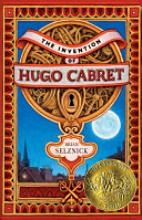
THE INVENTION OF HUGO CABRET – Brian Selznick


The middle grandson said he liked this book and since the movie is coming out and we might want to go see it together I decided to get a copy. Yikes! I asked him if he knew it was monstrously large at 533 pages. With much eye rolling and sighing he informed me it has a lot of big margins, pictures and blank pages and I could handle it. He and I and my other grandson went to the bookstore on a Sunday and I read it that evening after they went home.

It is beautiful. As soon as I finished I went to the scholastic website to investigate where I learned that Selznick wanted the book to feel like an old movie. At http://www.theinventionofhugocabret.com/about_hugo_intro.htm there is also a wealth of information about the author's inspiration, old movies mentioned in the book, the real train crash, and information about automata, specifically the one that was the inspiration for the automaton in this book. But I digress.

In 1931 twelve-year-old orphaned Hugo is trying to survive living in a Paris train station. His uncle who is the clock keeper for the station is missing, and though Hugo keeps the clocks running and picks up his uncle's checks he doesn't have any way to cash them. Having no income, Hugo is forced to steal food and try to remain undetected. Hugo also is skilled mechanically and steals nuts, bolts, metal, and gears from the toy seller to work on an automaton that his father had been working on before he died. Hugo's existence is threatened when he is caught stealing. There is suspense, a train wreck, and a close encounter with death.

I don't know how to adequately describe this book. Pages of fascinating illustrations are followed by pages of text and I couldn't read fast enough or look long enough at each picture. I read it, explored information about the author and the real people and events portrayed in the book and then read it again. It would be a lovely book to share with a child and I am looking forward to the movie. Hope my grandsons will let me go with them.

THE HIDDEN MAN – Anthony Flacco


If you are pining for something to make your skin crawl this is a book for you. I picked this up at The Strand in NYC on my last trip there in 2008. Why it got shuffled to the bottom of my “to read” pile I have no idea, but since it has been gloomy and windy I was in the mood for a tale noir. This didn't disappoint.

I remember picking it out of a basement bin at The Strand and being intrigued by the beautiful cover art which is a photo of lighted buildings at the 1915 Panama-Pacific International Exhibit in San Francisco. What is so great about the cover art besides the beauty of the scene is the way the title and author's name seem to be reflected also. Another thing that interested me was the author profile in the back. There I read that he is a screen writer. This book actually read a bit like a movie – chapters occurring simultaneously or seconds, minutes, or hours apart.

The city is busy rebuilding on the rubble of the great earthquake a decade before, and preparing for the world's fair. A famous mesmerist is struggling to keep his act going while spiraling into a drugged world of his own where he battles the onset of Alzheimer's. Detective Randall Blackburn deals with unethical dealings within the police department while teaming with his son to solve a murder which hasn't happened yet. A nondescript man, who is actually a demented killer, stalks victims (and Blackburn's fiance) in broad daylight. Many people see him yet he goes unnoticed. Blackburn's daughter keeps the plot hopping too with her efforts to be an individual in her own right as an independent woman in this stuffy 1915 upper crust society.

A lot of action, intrigue, and yes a lot of blood and guts. Actually quite well written and nice short 275 page afternoon read. My only complaint? Typos! Argh!

MENNONITE IN A LITTLE BLACK DRESS – Rhoda Janzen


I bought this title last year when our neighboring community, which has a large Mennonite population, was buzzing about it. However, it was one of those books that I kept meaning to get to and kept moving around my bookshelf. Then the Jay County Public Library Book Group picked it which prodded me to get it read. I did like it a lot and recommend it but I have to confess at times Ms Jansen could have moved along if you know what I mean.

Everyone at discussion liked the book, some more than others. All of us could identify with being down and out but knowing that you can always go home and those there will still love you.

To put this book in a nutshell - Janzen unfolds a story of a person leaving roots and religion behind, making a life out in the world, then coming full-circle home to heal in the bosom of the family she left behind. She begins her memoir with her decision to go home after the breakup of her marriage and a serious automobile accident. If you pick it up though don't expect to get a tale of religious rebirth or a prodigal's return. While she tells us heartwarming stories of growing up in a close family, and the goodness found among her own people, she does not ever seem to feel that leaving was wrong and she certainly does not reaffirm her faith. Instead she points out the issues from her past that made her want to flea and how those issues still bother her.

This book is a memoir but also a look inside a denomination that most of us are not acquainted with of long skirts, submissive women, bonnets, and disapproval of higher education. We also get to see, over a 40 year period, how there seems to be some mellowing or softening of some of the rigid rules that Janzen grew up with. For instance when she was a girl dancing was against all rules. By the time she returns 15 years later, there is “liturgical movement” at church and young girls are allowed to take formal dance lessons.

I feel like much of the book was therapeutic for the author to help her accept the failure of her marriage to a man who after fifteen years revealed he is a homosexual. She still loves him and perhaps she always will. Janzen uses humor and sarcasm which I appreciate but she also illuminates her family and friends so tenderly that one can't help but feel an affinity with them. She doesn't stay but taking the trip home with her is worth the ride.