Search This Blog

Tuesday, August 16, 2011

WENCH – by Dolen Valdez


Did you know there was a resort close to Xenia, Ohio called Tawawa, where in the 1800s southern men could vacation with their slave lovers? I did a bit of research and the place did exist. There is a marker at the site of Wilberforce University that makes reference to the resort in Greene County, Ohio. At the NPR website there is an interview with the author that explains more about the resort and the reason it was chosen by southerners which had to do with accessibility for them.

Anyway, it isn't a long book and was quite surprising. Apparently Tawawa became a safe haven for Southern slave holders to meet, escape for a while, evade the prying eyes of their communities and their wives, and live for a while in ease with their slave lovers. I had never encountered this concept or similar stories before. Lizzie, Reenie, Sweet and Mawu are the slave women whose vacation lives we examine in this engaging book. We see them during their “vacations” over four years during the 1850s at which time the Fugitive Slave Act was in place. Therefore, while in Ohio, though the women are in a free state, if caught after escaping their masters they would legally have to be returned. Assured, there would be dire consequences. Also there are children or other family back in the South that they do not wish to leave behind. In some cases they really do love their men/owners too and their lives, loves, and fears are complicated.

While at the resort the women still work. They take care of their master's cabins or work in the resort. They do get to dine elegantly in nicer clothes (actually left behind by white vacationers summers before) in the evenings. Lizzie knows her master Drayle actually does love her and their children. And yet, in the South property is property, therefore their children live in the quarters separated from their mother. Drayle keeps Lizzie in the main house. One of my favorite excerpts was read by the author on NPR and follows:

He brought her books. The first word she learned to read and write was she, and it delighted her so much, she wrote it everywhere she could. She wrote it in the biscuit batter with her spoon. She dug it in the dirt out back with a stick. She sketched it in the steamy windows when it rained. When she pricked her palm with a kitchen knife, she squeezed the skin until she could write her new word out with blood on a scrap of cloth. She traced the word with her fingers on the smooth parts of his body while they laid together in the storeroom at night.

That scene to me illustrates Lizzie's intelligence and yet how it is that she came to love him.

Mawu does not fare as well as Lizzie. She hates her master/lover and there are plenty of violent scenes between them. She also knows perfectly well what it means that they are in free territory and tries to plot escape. She practices a type of Voodoo and has no use for the passivity of the Christianity that the rest ascribe to.

For a short book there is plenty to think about and examine. I recommend it.

Sunday, July 10, 2011

BEATRICE AND VIRGIL - Yann Martel


I have progressed from one nightmare inducing book to another. This title also is a one-day read as it is only 240 pages. However, I need, really need someone to read this and discuss it with me. Martel's book The Life of Pi is one of my favorites and is written in allegory form telling a story of adversity, adventure, survival, and murder. There could be a blog entry on that book if I would reread it. But I digress. Keeping to his form Martel has given us an unusual Holocaust story by once again using an allegorical animal tale. I don't want you to think it is hokey or silly at all. It is so cleverly written with a tale within a tale.

The protagonist is Henry who is a successful but frustrated writer. After enjoying fame and comfortable income from his work he is having trouble selling his next idea to his publisher. He wants to write about the Holocaust. Not the typical stories that we are so familiar with, but one that perhaps touches less on the horrors and the dying but on stories of the everyday living and relationships during the Holocaust. Henry feels that the Holocaust has been condensed, repeated, and as he put it, “...packed into a suitcase. Art as suitcase, light, portable and essential.” He feels that this is a disservice to the people and that they have other stories to be told. However, he is told he is not Jewish and therefore not entitled to explore those issues, that the world needs only to see the horror so it will not be repeated.

Frustrated he moves his family to some unnamed city (I never was able to figure out where), changes his life-style and embarks on multiple new projects, none of which are related to writing. Henry meets another man also named Henry who is a taxidermist. The taxidermist is a very dark, older, and serious man who asks Henry to help him edit a play he has written. The play is centered around a relationship between Beatrice and Virgil, which happen to be in reality a stuffed donkey and howler money in the taxidermist's shop. The two begin their collaboration which lasts over several months.

As soon as I realized the play as allegory and that something dark was lurking around the edges I began to fear for Henry and I knew I didn't really want to know the true story behind the play. By then I was reading faster and couldn't put the book down even though I really sort of didn't want to know what was hidden there. When Henry began to realize who the taxidermist really was and what he was writing about I was so on edge I could hardly stand it. The sadness and shock of the ending came so quickly there was barely time to breathe.

Please read this book and tell me what you think. Only once in my life have I been face to face talking to someone whom I believed was truly an evil person. I don't want to think that I could be like Henry and have a relationship with a person and not see it if they were/are evil. I do not mean a person who has done bad things or someone who has differing morals than I do. I mean a truly dark individual who feels no remorse, empathy, or guilt. This is a wonderful, thoughtful, and ponderable read.

Saturday, July 9, 2011

ROOM - Emma Donoghue


I have retired as a school librarian so I will no longer be reporting on what middle and high school students are reading. Much is the pity but now I will read read read anything I want, whenever I want, and say what I like.

Room is on my Nook and I must admit it was handy for reading while traveling but I still prefer the convenience of a book in my hand. I miss the ability to flip pages looking for something I missed or glossed over when reading too fast. I also want some friend to read it so we can discuss but alas I cannot pass it along since it is on my digital reader. Tsk tsk. Anyway, this is one disturbing read. It is short so you can knock it off in one afternoon, unless you have to put it down and ponder like I do.

Jack, who is five, is the narrator of the story. His mother had been abducted seven years prior as a young girl. Ma and Jack are kept isolated in a 11X11 foot room which is in a shed behind “Old Nick's” house. Nick makes nocturnal visits while Ma keeps Jack hidden in the wardrobe. She refuses to let Nick interact with Jack or even to see him. She does her best to teach Jack lessons, play games with him, and make sure he gets exercise.

As the reader I pondered upon what Ma's thoughts and plans must have been and I tried to determine how she was going to accomplish what she wanted to. However, the narrative is by Jack and I was mesmerized from the beginning when he speaks, “Today I'm five. I was four last night going to sleep in Wardrobe, but when I wake up in Bed in the dark I'm changed to five, abracadabra. Before that I was three, then two, then one, then zero. Was I minus numbers?" 


I thought it might be tiring experiencing a whole book through the mind of a small boy but the opposite was true. Room is all Jack has known and he is actually quite happy.  Eventually Ma and Jack find a way to be rescued. What happens after is nearly as fascinating as what went on before. How does a small one cope with a new world when he has lived in such deprivation? What happens when he is homesick for room which was his mother's prison. How does he go about sorting out all the things he has never before seen, smelled, tasted etc. and which others take for granted he should understand. How does Ma cope in the world when it is known what has happened to her and what does her family do with the knowledge that her son is the product of a perverted and demented man?

So much to think about. Making it equally creepy to read at this time is the fact that this very week we are watching the Jaycee Dugard story unfold in a Diane Sawyer interview and also when a young college student is currently missing. Both true stories with similarities to this novel.  
This author website is nice http://www.roomthebook.com/

Thursday, May 5, 2011

FEED – M.T. Anderson

On 10/15/10 ACHS Literati met to discuss their choice of three titles and I hosted Feed by Anderson. Several students had expressed an interest in resurrecting this class set but when it came down to getting it read I ended up with two kids and only one had completely finished it. Oh well… I had used this title with success several years ago but his group seemed to think it was too harsh, the language was too bad, or they just couldn’t get into the somewhat convoluted plot.

I liked it, even though the language is very low-class. We talked about why we thought that is and I am proud to say that both my group from the past and these students realized that the author was making a point about evolving language and cultural mores. In this book many things that are taboo today are the norm in a future world where people live in stratas, mobility is accomplished easily vertically as well and horizontally, and people party on the moon.

Children in this future world download their lessons at their appropriate maturity level through a feed into their brains. The feed also delivers ads and collects marketing information from the kids. At a party a virus is introduced to some feeds which results in brain illness making the kids very ill and one begins to die. We discussed the love story, family issues, and cultural issues also included in the plot lines. The environmental issues seemed to be what interested my students particularly. They seemed not at all to think that the world in this book is unlikely and they wondered what it would be like to have no easy access to plants, trees, and animals. We did discuss whether it would be really “cool” to have no school, just a feed that along with your lessons you get adds directly into your thoughts… continually... similar to pop-ups adds on the Internet now.

Wednesday, May 4, 2011

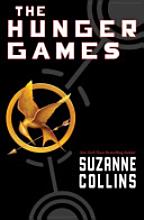
THE HUNGER GAMES – Susanne Collins

On 12/10/10 our middle school had a “Hunger Games Book Party.” Our school purchased multiple copies of this dystopian YA novel and for a long period of time last year they were all checked out with reserves pending. The high school Literati group read it liked it so much that this school year we decided to open it up to the middle school and plan a “Hunger Games Party” to follow up. Any student in grades 6-8, who wanted to, could sign up to take part. They were given a period of several weeks which was over Thanksgiving break and through the first two weeks of December. 45 students completed the book, passed a quiz, and were sent invitations to attend a “Reaping in Area 12.”

The library was set up segmented by numbered “Districts” using large paper circles on the tables. A cornucopia was at the entrance containing folded papers with items printed on each one to signify what might have been available to the tributes. On a table, were decorations to set the scene such as bows and arrows, loaves of bread, herbs and bandages, and a large North American map with transparencies representing districts so we could discuss where they might have been and move them around on the map. In preparation for our own “Hunger Game” we made up brown paper bags with treats and prizes to be awarded during the game.

The students got invested in this post-apocalyptic world where Panem is a loosely disguised North America. Most knew that Katniss was from somewhere in what is now Appalachia but placing the other districts around the continent took a lot of clue searching and speculation. It is amazing what the readers remembered about the differing districts. Some high school students had been able to relate this book to Brave New World by Aldous Huxley and Orwell’s 1984, but middle schoolers are not so savvy so I was very please that some knew to connect it to The Giver by Lowry, and The Last Book in the Universe by Philbrick. They of course were intrigued by the concept of the hunger games, the sponsors sending things to the tributes as they fought for survival, and the idea of the rest of the nation watching the games live on TV. The students were very vocal about the character development and of course they liked the love story unfolding. I retrieved some discussion questions from the author’s web site but we didn’t need them. These readers were so into this book that they freely discussed how they felt about the plot and what they thought would happen, their feelings about the deaths, and even the psychology of the effects on the tributes who survive. By the end of discussion I was sure most of these students would go on to finish the series.

Students sat by “district” as each got a corresponding number and also one item from the cornucopia. A “parachute” (umbrella) hung from the ceiling with a basket of snack food attached which was the final prize for the winning team of our game. At each place was a treat, relevant to the book, of bottled water, bread & jam, and cookies (from Peeta’s dad), and score sheets.

We played a simple but animated game which I would like to say I made up but I am pretty sure I simply adapted one I heard or read about. I read short pretend game scenarios which included points for having cornucopia items which each team tallied. As I was reading I would stop occasionally and shout out an announcement and give out “sponsor packages” such as a bag of beef jerky to the team with the least amount of points, candy coal to those who were resourceful and took shoes from the cornucopia, or candy corn to the team with a shovel. At the end of the game the team with the most points got the parachute prize.

It is rare to get so many kids this excited about one book. Discussion was animated and there was much speculation about what actors would be good to play the lead parts.

Tuesday, May 3, 2011

NOTES FROM THE MIDNIGHT DRIVER – Jordan Sonnenblick

On 9/17/10 Five students met to discuss this contemporary teen problem/comedy book. I was really pleased to hear what they had to share. The first item up for discussion was the cover. Several students said that until I pressured them to they didn’t want to choose this title because they viewed the cover as elementary and too silly. I believe they had a point. The garden gnome behind the wheel of a car did seem a little funny, especially since in the story he is decapitated and under it. However, we all really liked the book.

A worry had been at the beginning when Alex, who is portrayed as a good kid and a good student, rebels against his parents who are separating that this would be just another problem teen book. So it was interesting to the students when Alex evolved into a caring, intelligent, insightful young man. After he gets drunk, steals his mom’s car, and vandalizes the neighbor’s lawn that is. The students found it refreshing that the growth occurred because of new relationships, sharing music, and a developing sense of responsibility and not through harsh judgment as is usual in many teen novels.

They found Alex frustrating but quite believable and likable. The introduction of a tad bit of romance didn’t hurt the story either as cute pixie-like Laurie added some dimension. They liked her character and knew she was Alex’s girlfriend before he figured it out. Also, they liked the humor and cantankerous Sol Lewis the aging ex-jazz guitarist to whom Alex is assigned for community service.

I knew the vocabulary and plot was a bit simple for high school sophisticated readers but for the beginning of the year and especially for the freshmen it was still a good choice.

Sunday, October 24, 2010

MONSTER OF FLORENCE – Douglas Preston & Mario Spezi


The Jay County Public Library book group met to discuss this book last Monday. (Sigh) I took so long to stew about the meeting that now I'm not sure what I want to say.

This piece of nonfiction is a fascinating narrative of two men, an America author newly living in Florence and a noted and respected Italian journalist, who investigated a series of cold-blooded murders in the hills around Florence, Italy. In the process of their investigations the Italian was arrested for the crimes and the journalist had to flee back to America to avoid the same fate.

But that didn't end the friends' investigations and this book is the product. Preston and Spezi had been on TV in a special by Stone Phillips and that is what prodded me into reading their book. The story of their trials and difficulties with Italian authorities and the strange justice system is as engrossing as the stories of the murders. I couldn't wait to finish it to see how the book got completed and if they ever found out who the killer was.

The murders had begun in 1968 and continued well into the 1980s with many people being investigated but no hope of any real closure. The crimes were perpetrated always against young lovers and the bodies were terribly mutilated.

As the reader you delve into more than just the murder investigation. Generations of secrecy and taking care of ones own, misuse of the justice system, incompetent authorities, sub-cultural mores, and ideas about social strata are all examined. I was shocked to find out how different the laws are in Italy and on what little evidence one can be arrested and even convicted. Several people were in fact convicted only later to be found innocent!

I read this a few years ago with my Monroe adult group and that discussion was animated, lively, and so much fun. The hosts of the discussion had brought maps, copies of news articles and transcripts from the Stone Phillips interviews. Most of us if not all were equally entranced with this book.

Alas, The JCPL group did not feel the same. Maybe two or three of us were glad we read it. The rest either didn't like it at all or didn't even read it. Anyway, that so disappointed me. I am thinking that the JCPL group likes to read “shallow” or in other words they don't want to read anything that is disturbing, that they have to really dissect or think deeply about, or anything that questions their values or ideals. Also, many of them won't read anything that has “ugliness” like death, or persecution which leaves out holocaust material, books where the people struggle with abuse, poverty, etc, and any book about current war issues. They love to read what they refer to as “sweet,” “beautiful,” or “warm.” Now, that is not a bad thing. There are a lot of people like that and they read what makes them happy, and once in a while I like that too. However, that is not what I want to do steadily. I want to feel, really feel, and think, wonder, predict, be shocked, surprised, etc. especially when reading a book that will have a discussion. I don't always have to like a book to finish it, or see value in the discussion. I must the oddest of oddball readers?